
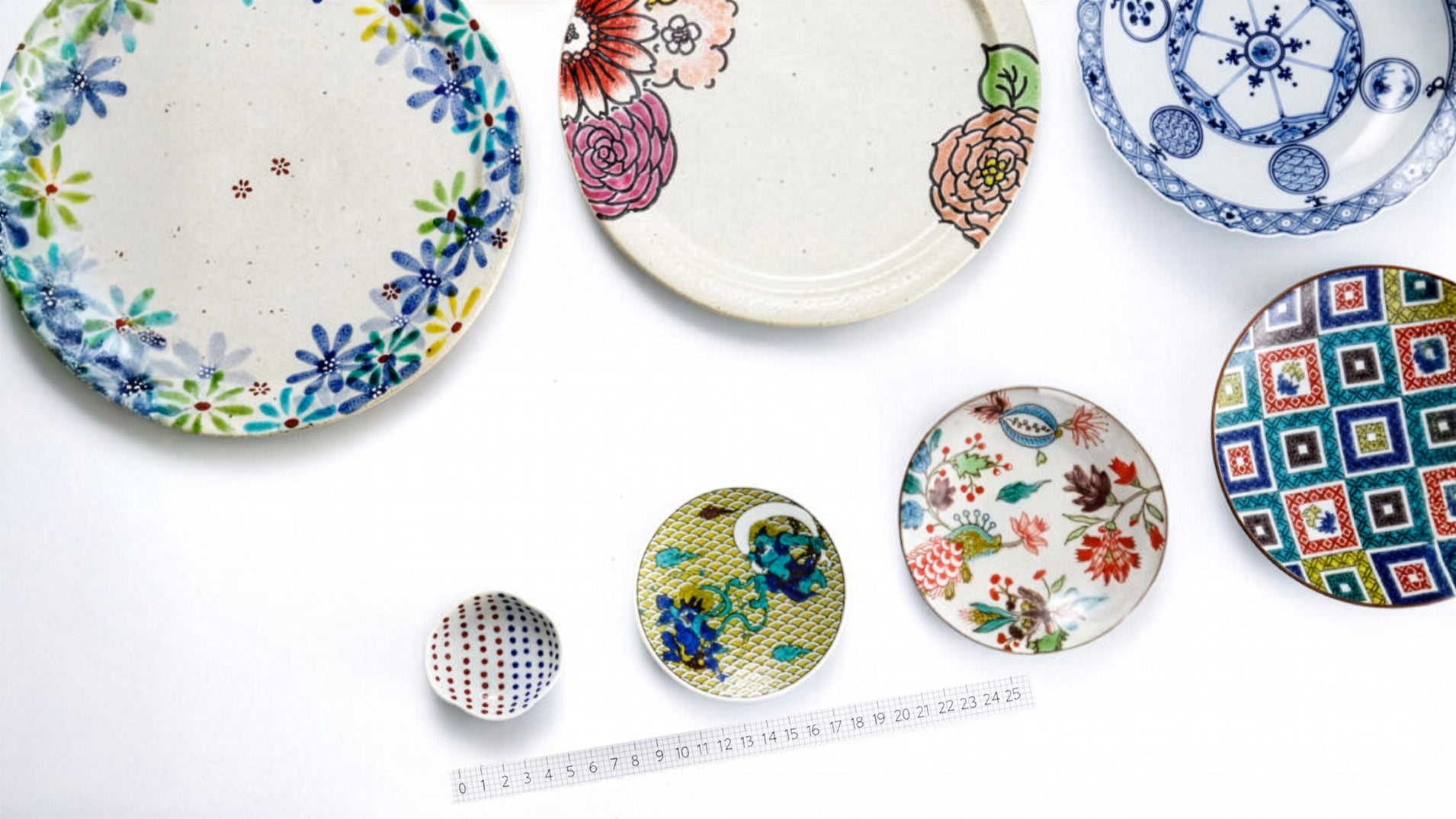
Kutani Ware Plate Sizes: How to Choose the Right One
Written by Team Japan Kutani
Knowing the sizes of Kutani ware plates and how to use them can make choosing tableware much easier. This guide will help you understand traditional Japanese measurement units and give you a clear idea of what each size is best used for.
TABLE OF CONTENTS
How Many Centimeters (Inches) Are in a “Go”?
Even today, Kutani ware is often sized using Japan’s traditional measuring system, shakkanho, which includes units such as go (号, size number) and sun (寸, length unit).
To be exact, 1 go or 1 sun equals 3 cm (1.2 in). To estimate the diameter of any plate, simply multiply the number of go or sun by 3 to get centimeters or by 1.2 to get inches.
Plate Sizes and What to Serve
2-go Plates

The 2-go (2-sun) plate has a diameter of about 6 cm (2.4 in), making it fairly small. It’s perfect for soy sauce or condiments, as well as wasabi, grated ginger, salt, or small portions of delicacies such as shiokara or mentaiko. The petite size works well for holding condiments or toppings beside the main dish.

The 2-go plate is also just the right size to be used as a chopstick rest.
3-go Plates

The 3-go (3-sun) plate has a diameter of about 9 cm (3.5 in). Often referred to as mamezara, they are also ideal for serving soy sauce or dipping sauces for sashimi or gyoza. Also great for serving small portions of side dishes for one person.

The 3-go plate is perfect for serving Japanese pickles, relishes, or small appetizers.
4-go Plates

The 4-go (4-sun) plate has a diameter of 12 cm (4.7 in), making it slightly larger than a mamezara. It’s great for serving individual portions of side dishes like boiled greens, potato salad, or sauteed vegetables. This size is also convenient for plating cut fruits like apples or pears.

Cheese fondue ingredients served on 4-go plates.
5-go Plates

The 5-go (5-sun) plate measures about 15 cm (5.9 in) in diameter, a small side plate commonly used as a personal serving plate. It’s convenient for plating small rolls, sliced baguette, or sweets.

The 5-go plate is recommended for serving small cakes and desserts.
6-go Plates

A 6-go (6-sun) plate has a diameter of 18 cm (7 in), making it a medium-sized side plate. Whilst it is a larger side plate, it can still be used as a personal plate for individual servings of shared dishes. It’s ideal for salads, side dishes, or single portions of hamburg steaks, croquettes, or similar dishes.

Salad served on a 6-go plate.
7-go Plates

A 7-go (7-sun) plate measures about 21 cm (8.2 in) in diameter, the size of a small dinner plate. It’s ideal for main dishes or pasta and works well as a serving platter for shared foods such as crispy karaage (Japanese fried chicken) or stir-fried vegetables. Convenient and versatile, it can be used for both individual meals and shared dishes.

A single serving of pasta arranged on a 7-go plate.
8-go Plates

An 8-go (8-sun) plate is about 24 cm (9.4 in) in diameter, the size of a medium dinner plate. It’s well suited for serving a main dish with side items for one person or for creating a one-plate meal with several dishes. It also works well for presenting larger portions meant to be shared. The even larger 9-go plate is especially useful for parties and gatherings.

Plate a steak with lettuce and potato salad on an 8-go plate for a restaurant-style dining experience at home.
The images above are basic suggestions. The most convenient size or the best plate for a particular dish will vary from person to person. Start by taking a look at the plates you already have and noting which ones you use most often or find most practical. Keeping this in mind will make it easier to choose new tableware in the future.
Popular posts

Categories


Leave a comment
This site is protected by hCaptcha and the hCaptcha Privacy Policy and Terms of Service apply.